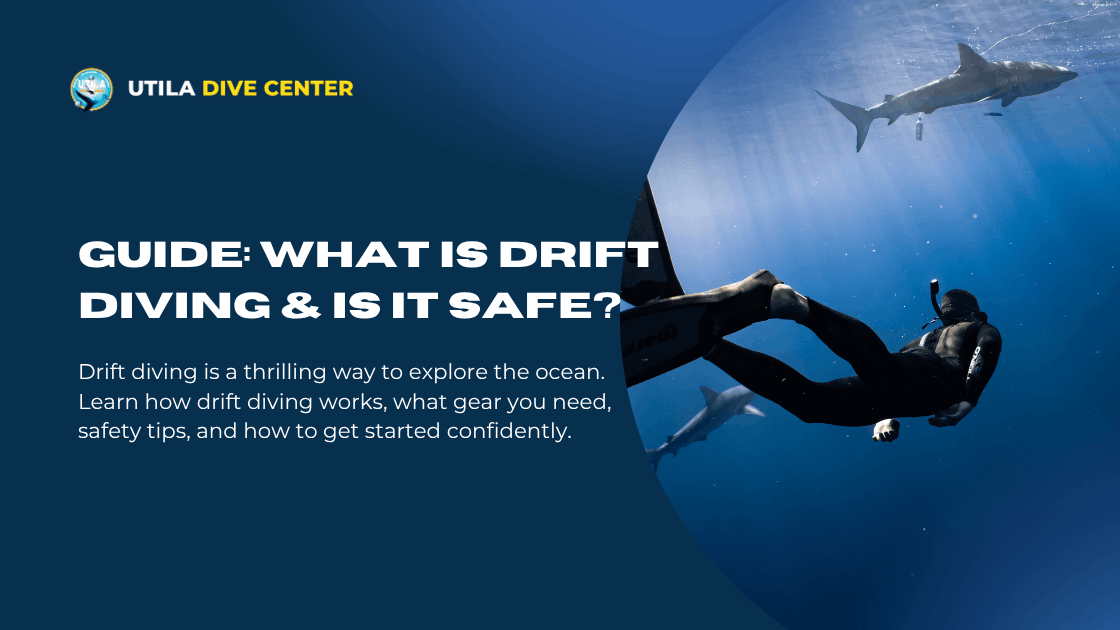
Guide: What is Drift Diving & Is It Safe?
Guide: What is Drift Diving & Is It Safe?
By: Manny Lagos | Date: 2026-07-15T15:40:10.630Z
Drift diving isn’t your typical dive, it’s an experience you’ll never forget.
One minute you’re dropping in, and the next you’re floating effortlessly with the current, locking eyes with a sea turtle, and swimming alongside beautiful fish like you’re part of the pack. No heavy kicking, no racing against the tide, just you, the ocean, and the ride of a lifetime!
While we don't have currents on Utila, we do offer drift diving training and experience currents on our UDC on Tour liveaboard trips. Its something we're very familiar with!
So, if you’ve ever wondered what drift diving is or questioned if it’s right (and safe) for you, then you’re in the right place. This guide has all your answers.
1. Understanding What is Drift Diving
What is drift diving, really? In simple terms, drift diving is when you let the natural ocean current carry you along as you explore the world beneath the waves. Think of it like SCUBA diving on cruise control, where you jump in at one point, and the water takes you the rest of the way.
Instead of swimming hard or going against the flow, you just ride with it. And most of the time, your dive boat follows along from the surface and picks you up wherever you resurface. Super chill, right?
It’s not a complicated technique, but it does require a bit of prep and awareness. That’s exactly what makes it such a fun skill to learn.
2. Why Divers Choose Drift Diving
Here’s why so many divers choose drift diving:
- Effortless movement: You don’t have to kick much, the current does all the work.
- You get to see more: You’ll cover more ground during your dive, which means more marine life, more reef, and more “whoa” moments.
- Incredible marine life: Some of the coolest creatures love hanging out in areas with a bit of current.
- Thrill factor: Let’s be real – there’s something incredibly thrilling about being carried by the ocean.
Wondering what are the advantages of drift diving? Honestly, it’s a combo of efficiency, comfort, and straight-up fun. Once you try it, you’ll see what the hype is all about.
3. Is Drift Diving Safe? Advantages & Dis-Advantages
Now, let’s answer one of the most asked questions.
Is drift diving safe? Absolutely, as long as you’re trained and know what to expect. Like any kind of diving, it comes with a few challenges. Though nothing you can’t handle with a little know-how and expert guidance.
What are the advantages of drift diving?
- Less physical effort means you can stay underwater for longer durations without getting tired.
- More to see since you’re covering more area.
- Natural interaction with the underwater environment, no chasing fish, just swimming by.
A few things to watch out for:
- Limited control over direction: The current leads the way.
- Need to stay alert: It’s easy to get separated from your group or the boat if you’re not paying attention.
- Not ideal for beginners on their own: It’s best to practice with a professional first (don’t worry, we’ve got you).
At Utila Dive Centre, we make sure every drift dive is done with proper briefings, under professional supervision, and with the right gear so you can focus on the fun part.
4. Recommended Equipment for Drift Dives
Good news: You don’t need a whole new setup to try drift diving. But having a few key items on your SCUBA diving gear list will make your experience safer and much more comfortable.
Here’s what we recommend:
- Surface Marker Buoy (SMB): So boats can see where you are when you surface.
- Reel or spool: To help you safely deploy your SMB from underwater.
- Whistle or signaling device: Great for catching attention if you surface a bit away from the boat.
- Dive computer or compass: Helps track your depth and time.
- A well-maintained SCUBA diving regulator: You want it to work without a hitch, especially if you're cruising in strong currents.
We’ll help you gear up and show you how to use everything properly. Safety first, always.
5. Best Practices During the Dive
Here are some tried-and-tested drift diving tips from our team:
- Stick with a guide or instructor: Especially for your first few drift dives. Our SCUBA diving instructors are pros at reading currents and keeping things safe.
- Buoyancy is everything: Stay neutrally buoyant so you can ride the current easily without sinking or floating up.
- Buddy up and stay close: The ocean moves fast, so always keep your dive buddy in sight.
- Relax and go with it: Don’t try to fight the current, that’s the beauty of drift diving.
- Deploy your SMB during your safety stop: That way, the boat crew knows exactly where you are.
In short – The ocean’s doing the work, you just need to go with the flow and enjoy the view.
6. Is Drift Diving for You? Beginners or Professionals?
Moving on, let’s bust a common myth – is drift diving just for professional divers? Not at all.
If you’ve already got your PADI Open Water Diver certification and logged in a few dives, you’re probably ready to give it a go. Add in a Drift Diver Specialty or go on a guided drift dive with us, and you’ll be cruising in no time.
Plus, if you want to become a PADI Divemaster or Instructor, this is a must-have skill. When you learn how to drift dive, you also learn how to assist and guide others through current-driven environments, and believe us, it’s way more fun when you know how to handle it like a pro.
Bottom line: Drift diving isn’t just for the experts. It’s for anyone who wants to take their diving to the next level, safely and confidently.
So, go ahead and ride the current (with the right training, of course)!
7. Top Drift Diving Destinations
Ready to try drift diving somewhere awesome? Here are a few top spots around the world:
- Ulong Channel, Palau
- Clutha River, New Zealand
- Molokini Island Hawaii
- Florida, USA
- Red Sea, Egypt
Conclusion & Next Steps
Drift diving is one of the most relaxing and exciting ways to explore the ocean. And now that you know what is drift diving and what are the advantages of drift diving, it’s time to try it for yourself!
At Utila Dive Centre, we’ve helped thousands of divers build confidence, stay safe, and fall in love with the thrill of drift diving. From first-timers to future instructors, we’re here to guide you every step of the way.
Ready to go with the flow?
Get SCUBA diving ready with UDC.
References:
[1] – Lagaligoliveaboard.com - What is drift diving?
[2] – Divinglore.com - Drift diving explained
[3] – Blog.padi.com - Drift diving tips: why you should try it & how to stay safe
Affordable Dive Trips In World Without Breaking the Bank
Utila Dive Center has listed the best budget friendly dive trips around the world and insider tips to enjoy scuba adventures without breaking the bank.
Read more
1 Week Dive Trip to Utila: Ultimate Itinerary for SCUBA Divers
Plan your perfect 7-day dive trip to Utila, Honduras. Uncover the top dive sites, local tips, and budget-friendly options for divers.
Read more
Emergency First Response Every Diver Needs to Know
Emergencies can happen anytime while diving, learn the key first response skills every diver should know to stay safe and help others when it counts.
Read more
The Importance of Equalization Techniques in Freediving
From Frenzel to mouthfill, learn key equalisation methods every freediver should know for safer descents & improved confidence underwater.
Read moreLET'S CHAT!
Whether you’re looking to learn to dive for the first time or want to take the next step and become a Divemaster or Instructor, our team is here to help create a custom package that helps you achieve your goals!