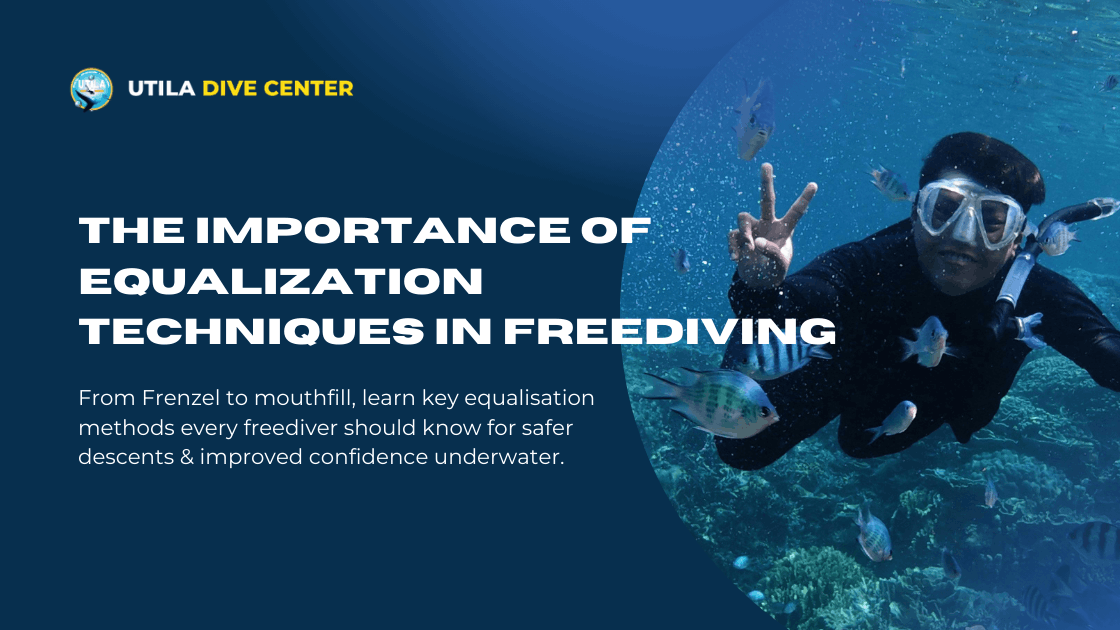
The Importance of Equalization Techniques in Freediving
The Importance of Equalization Techniques in Freediving
By: Manny Lagos | Date: 2026-05-07T09:31:28.478Z
You know that moment when you're floating above one of Utila's beautiful coral walls, and then around seven or eight meters down, that pressure hits your ears, hard? It’s a common occurrence, and we've watched this exact scenario play out hundreds of times over our twenty-plus years here at Utila Dive Centre.
New freedivers get so excited about exploring our incredible underwater world that they forget one really important thing: proper equalization techniques.
Without mastering these essential diving equalization techniques, every meter feels like hitting a wall.
But once it clicks, twenty meters isn’t just possible, it feels effortless.
Key Takeaways:
- Equalization techniques are THE foundation of freediving: Master this first, and everything else (depth, relaxation, technique) becomes possible.
- Start with Valsalva, but switch to Frenzel early: Believe us, the time you invest learning Frenzel properly will pay off big time as you get more advanced.
- Never force it and always learn with a qualified instructor: Pain means something's wrong, and there's no substitute for someone experienced in spotting problems you don't even know you have.
Read time: 7-8 minutes
1. What Is Equalisation in Freediving?
Concept
When you dive deeper underwater, pressure increases. Every ten meters you descend, pressure essentially doubles. And your body has air-filled spaces (mainly your ears, sinuses, and mask) that need to match this external pressure. Without proper ear equalization, things get uncomfortable real quick.
We always tell our students: think of it like your car tires. Wrong pressure = problems. Same principle underwater, except instead of a bumpy ride, you get a painful one.
How its different from SCUBA
Here's where freediving gets tricky compared to SCUBA diving. When you're on SCUBA, you've got that tank feeding you fresh air continuously. But freedivers work with whatever air they take at the surface. No refills, no backup plan.
That's why freediving equalization techniques are a whole different ballgame.
We have to be smart about it, which is why freedivers have come up with methods like mouthfill equalization and advanced Frenzel equalization.
What Happens If You Don’t Equalise Properly?
We don't want to scare anyone, but we've seen the aftermath of poor equalization. Mild cases give you an ear squeeze, it feels like someone's pinching your eardrums from inside.
Serious cases? Ruptured eardrums, sinus barotrauma, inner ear damage, vertigo, and whatnot.
2. Why Equalisation Is Important?
Beyond keeping your ears intact (which, let's be honest, is pretty important), mastering equalization techniques opens up everything else in freediving. When you're not constantly worried about ear pressure, you can focus on your streamlining, your relaxation, and your breathing technique.
We've watched students make impressive breakthroughs once their ear equalization becomes automatic. Suddenly, they're noticing the way light filters through the water, or they're finally relaxed enough to extend their breath holds. It's like removing a mental barrier.
For our instructor candidates, though, good diving equalization techniques aren't just important, they're non-negotiable.
You can't teach what you haven't mastered yourself. Plus, when you're demonstrating techniques to nervous students, the last thing you want is to surface early because you couldn't clear your ears properly.
3. Common Equalisation Techniques in Freediving
Valsalva manoeuvre
Most people know this one already. Pinch your nose, blow gently and…pop! Your ears are clear. It's the technique everyone learns first, probably because it's so simple.
We still teach Valsalva manoeuvre equalization to beginners, but here’s the catch: it's got serious limitations in freediving. Works great for the first few meters, but as your lungs compress deeper down, you'll find it increasingly difficult to generate enough pressure.
Think of Valsalva manoeuvre equalization as your training wheels. Useful when you're learning, but eventually you'll need something more sophisticated.
Frenzel technique
This is where things get interesting. Instead of using your diaphragm like in Valsalva, you use your tongue as a piston. You trap some air in your mouth and use your tongue to push that air into your Eustachian tubes. And because you're not relying on compressed lung air, this Frenzal equalization actually works at greater depths.
Sounds weird, right? It is weird. The first time someone explains Frenzal equalization, most students look at us like we're making it up. But once you get it (and this can take anywhere from a few hours to a few weeks), it's a total game-changer.
The tricky part is that everyone's anatomy is slightly different. Some students pick it up immediately, others need us to really work with them on the mechanics. We spend a lot of time in the shallow end of the pool getting this right because it's that important.
Mouthfill technique
This is graduate-level stuff. We typically introduce mouthfill equalization to students who are consistently diving past 20 meters and looking to go deeper. At extreme depths, your lungs are so compressed that even Frenzel becomes challenging.
Mouthfill equalization involves creating an air reservoir in your mouth at depth. You literally fill your cheeks with air and use that for equalization during the deepest part of your dive. It sounds simple, but the timing and technique require serious practice.
We don't rush students into mouthfill equalization. It's an advanced technique that demands respect and proper instruction.
Hands-free methods
Some divers - and we're talking maybe one in fifty- can equalize without using their hands at all. They've developed such fine muscle control that they can open their Eustachian tubes through subtle jaw movements or throat muscle contractions.
Honestly, it's pretty impressive to watch. We have a few instructors who can do it, and it looks effortless. But for most people, hands-free equalization either works naturally or it doesn't. We don't spend much time trying to force it.
4. How to Learn Equalisation the Right Way
Start dry
Before you even think about getting in the water, practice on dry land. Sit somewhere comfortable and work through each technique slowly. Which muscles are you using? How does each technique feel different? This body awareness goes a long way when you’re underwater.
Breathing and muscle awareness
Different students respond to different breathing patterns before diving. Some do better with deep, slow breaths. Others prefer shorter, quicker ones. There's no universal right answer - you need to experiment and find what works for you.
We encourage students to pay attention to how their airways feel with different prep routines. Some people find that doing gentle neck stretches helps. Others swear by yawning a few times before descending.
The more aware you become of these little details, the better you'll be at troubleshooting when things aren't working beneath the waves.
Working with a qualified instructor
We've been teaching diving here at Utila Dive Centre for over twenty years. We've seen every possible variation of student anatomy and learning style you can imagine.
There's really no substitute for having someone experienced watch your technique and give you immediate feedback. We can spot problems you don't even know you have and suggest adjustments based on your specific body mechanics.
Sure, there's lots of information online these days, but when you're stuck at 8 meters and can't figure out why your ear equalization won't clear, a YouTube video isn't going to help you. An instructor who can work with you one-on-one? That's what gets you past those barriers.
5. Equalisation Tips for Beginner Freedivers
Equalise early and often — don’t wait to feel pressure
Start equalizing early - like, as soon as you start descending. Don't wait until you feel pressure. By then it's often too late, especially if you're still learning Valsalva manoeuvre equalization.
Always descend feet-first when practising
Practice feet-first descents when you're starting out. Head-down looks cool and all, but it makes equalization way harder and doesn't give you an easy way to surface quickly if something goes wrong.
Never dive with a cold or blocked nose
Never, and we mean NEVER, dive when you're congested. We've had students show up with colds, insisting they feel fine, but ended up having a terrible dive. Congestion makes proper equalization basically impossible and also increases your chance of injury.
Don’t force it — pain is always a red flag
If it hurts, stop. Period. Equalization should never be painful. Pain means something's wrong, and pushing through it is how you end up with ruptured eardrums.
Learn Frenzel as early as possible — it's worth it
Learn Frenzel equalization early, even if Valsalva manoeuvre equalization seems easier at first. Trust us on this one - the time you invest in learning Frenzel properly will pay off big time as you get more advanced.
6. Common Equalisation Challenges (and Solutions)
Can’t equalise past 5–10m?
This is probably the most common problem we see. Usually means it's time to ditch the Valsalva and learn Frenzel properly. As your lungs compress deeper down, Valsalva just doesn't generate enough pressure.
We spend extra time in the pool with these students, working on the Frenzel technique in shallow water until it becomes second nature.
One ear not clearing?
Anatomical differences can make one ear more stubborn than the other. We've found that tilting your head slightly toward the problematic ear usually helps. Sometimes, gentle jaw movements can also help open things up.
Over-equalising or delayed equalisation
Some students go overboard. They either blow too hard or wait too long between attempts. We teach gentle, frequent equalization, think "sipping" air into your ears, not "blasting" it.
Timing takes practice. We usually tell students to equalize every meter or two on the way down, then adjust based on how they respond.
Equalisation block (reverse block)
This happens when air gets trapped in your ears during ascent, usually because of swelling from forced equalization or diving when congested.
The solution is usually to descend slightly and then come up more slowly, giving the trapped air time to escape.
Final Thoughts
After more than two decades of teaching people how to dive, we can tell you with complete confidence that equalization techniques are THE fundamental skills for freediving. Everything else builds on this foundation. Get it right, and you'll be amazed at what becomes possible.
Everyone's different, though. What works perfectly for one student might need tweaking for another. Don't rush it, though. We've seen a lot of eager students try to push too hard, too fast, and end up hurt or discouraged. Take the time to learn properly, practice regularly, and always prioritize safety over depth.
Ready to get started? We're here to help you through every step of the process, from basic techniques to advanced instructor-level skills. Because when you nail equalization, everything else in freediving becomes possible.
Affordable Dive Trips In World Without Breaking the Bank
Utila Dive Center has listed the best budget friendly dive trips around the world and insider tips to enjoy scuba adventures without breaking the bank.
Read more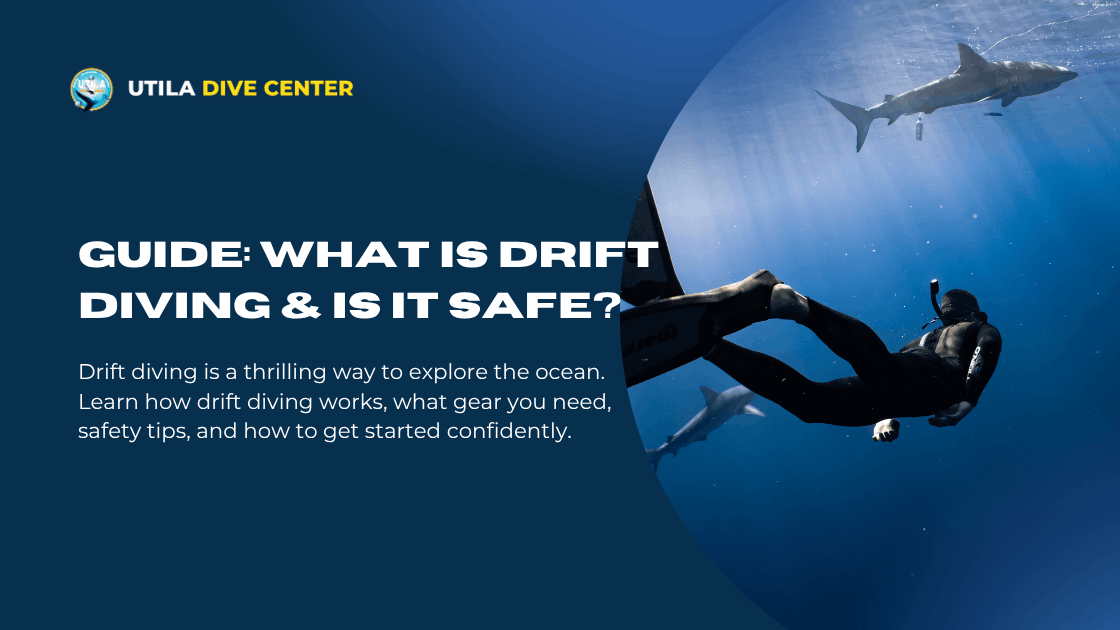
Guide: What is Drift Diving & Is It Safe?
Drift diving is a thrilling way to explore the ocean. Learn how drift diving works, what gear you need, safety tips, and how to get started confidently.
Read more
1 Week Dive Trip to Utila: Ultimate Itinerary for SCUBA Divers
Plan your perfect 7-day dive trip to Utila, Honduras. Uncover the top dive sites, local tips, and budget-friendly options for divers.
Read more
Emergency First Response Every Diver Needs to Know
Emergencies can happen anytime while diving, learn the key first response skills every diver should know to stay safe and help others when it counts.
Read moreLET'S CHAT!
Whether you’re looking to learn to dive for the first time or want to take the next step and become a Divemaster or Instructor, our team is here to help create a custom package that helps you achieve your goals!