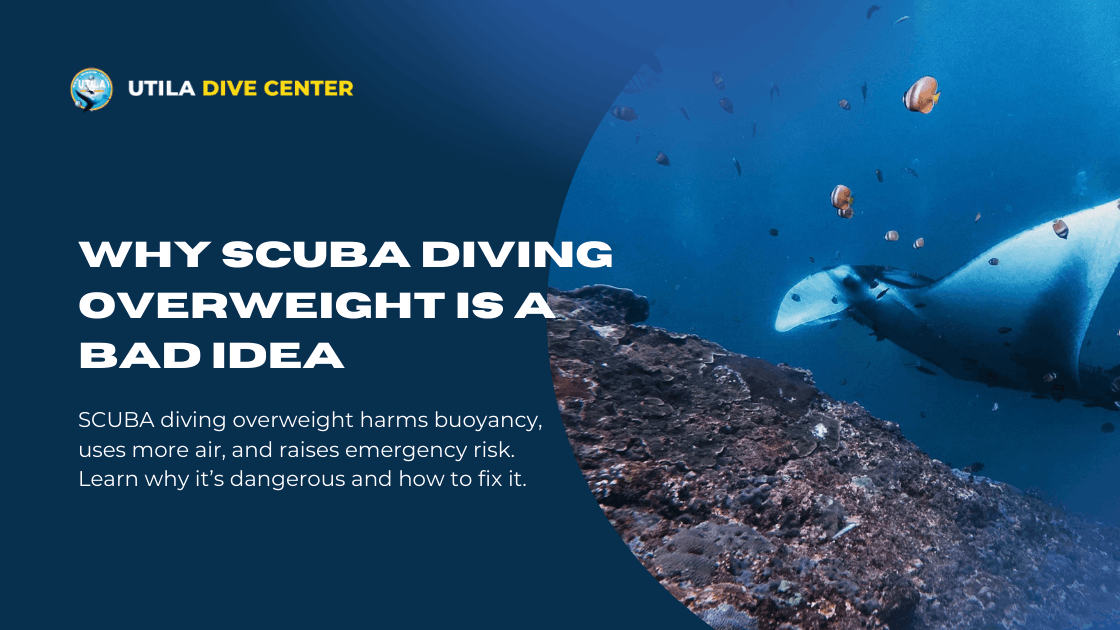
Why SCUBA Diving Overweight Is a Bad Idea
Everything you need to know about diving overweight
By: Manny Lagos | Date: 2026-01-22T12:45:09.402Z
SCUBA diving should feel like flying underwater. When it all comes together: your equipment, your breathing, your buoyancy, it's literally magic. But there's one mistake that can spoil that experience before you even descend: being overweight with gear.
At Utila Dive Centre, we’ve trained thousands of divers over the past two decades, and we see it all the time. SCUBA diving overweight might seem like a minor issue, but it can lead to serious problems.
Let’s talk about what it means, why it matters, and how to fix it.
Key Takeaways:
- Overweight SCUBA diving means carrying too much lead, and it makes you descend like a rock, struggle to stay off the bottom, and feel exhausted instead of graceful.
- The real danger? If your BCD fails or you're in trouble, excess weight makes it nearly impossible to ascend safely when you need to most.
- Fix it by doing a proper buoyancy check, dropping weight until you're at eye level with an empty BCD, and actually practicing hovering in shallow water.
Estimated read time: 4 minutes
What “overweighted” means
First things first, being "overweighted" in diving has nothing to do with your body weight. It’s about the amount of lead weight you're carrying to help you sink. Divers use weights to balance out the buoyancy of their gear and wetsuit. But if you add more than you need, things get messy.
Imagine walking with ankle weights tied on. You'd be sluggish, off-balance, and exhausted in a matter of moments. That's what overweight SCUBA diving is like.
You're not swimming effortlessly through the water. You're struggling against it.
Immediate risks
The moment you hit the water with excess weight, the problems begin:
- You descend too quickly, which can mess with your ears and make equalization really difficult.
- Your legs work harder to stay off the bottom, clouding the water with sand and possibly destroying coral.
- You burn through your air faster because you're constantly trying to adjust your buoyancy.
- You feel heavy and awkward, which can lead to stress or even panic.
These are not just inconveniences. They are indications that your dive isn't going well and that you're working harder than you should be.
Serious safety consequences
Now let's see the bigger picture. SCUBA diving overweight doesn’t just make your dive uncomfortable. It has the potential to make it dangerous.
-
If your BCD fails or you run out of air, dropping weight is your safety lifeline. But if you're overweight, it's harder to ascend safely.
-
In strong currents or poor visibility, excess weight reduces your agility and slows down your reaction time.
-
Overweighted divers tend to depend too heavily on their BDCs to keep them afloat. That can cause ascents that are beyond control. And uncontrolled ascents - as many of you already know - are one of the leading reasons for dive injuries.
At Utila Dive Centre, safety is our top priority. We teach all our students to respect the water, their equipment, and their limits.
And overweight SCUBA diving? That defies all three.
How to tell you’re overweighted (quick signs)
Not sure if you are overloaded with lead? Here are a few signs to watch for:
- You descend like a rock when you deflate your BCD.
- You have to inflate a lot of air in your BCD just to stay neutral.
- You can't hover without kicking or splashing with your hands.
- Your air runs out faster than your buddy's.
- You're exhausted after a short dive.
- You find yourself constantly adjusting your buoyancy underwater.
If any of these sound familiar, it's time to rethink your setup. Even a seasoned diver can fall into the trap of overweight SCUBA diving, especially when switching gear or diving in unfamiliar conditions.
Practical fixes (what to do right now)
The good news is that fixing overweight SCUBA diving is simple and makes a huge difference.
- Start with a good buoyancy check at the surface. With an empty BCD and a normal breath, you should be at eye level.
- Drop a pound or two and recheck. Most divers are surprised by how little weight they actually need.
- Distribute your weight equally. Trim weights can help balance your body and improve control.
- Practice hovering in shallow water. Concentrate on breathing slowly and making small adjustments.
- Maintain a record of your equipment and weight setup. Over time, you’ll dial in what works best for you.
SCUBA diving overweight isn’t just inefficient. It’s exhausting. Once you find your sweet spot, you’ll feel lighter, more agile, and way more confident underwater.
Instructor & training notes
At Utila Dive Centre, we take buoyancy seriously. Whether you're a first-time diver or training to be a PADI Divemaster or Instructor, we'll help you master it. It's the key to safe, enjoyable diving and something every diver can improve.
We also offer specialty courses in buoyancy control, technical diving, and conservation. If you are a fan of underwater photography or media, good buoyancy is an absolute must. You can't take great shots when you're constantly adjusting or bumping into the reef.
Quick pre-dive checklist
Before your next dive, go through this quick checklist:
- Did I do a buoyancy check at the surface?
- Am I using the minimum amount of weight required to descend?
- Is my weight evenly distributed?
- Can I hover without kicking?
- Do I feel comfortable and in control?
If you answered "no" to either of these, take a moment to make the required changes. Your dive and your safety depend on it. And if you're not sure, ask your instructor or buddy for help. Diving is a team sport, and we all learn from each other.
SCUBA diving overweight isn’t just a beginner’s mistake. It’s a habit that can hold you back and put you at risk. At Utila Dive Centre, we believe every diver deserves to feel confident, comfortable, and safe underwater. So let go of the extra lead, practice your buoyancy, and dive like a pro. Your lungs, your legs, and the reef will thank you.
And if you’re ready to take your diving to the next level, we’re here to help.
References:
[1] – Blog.padi.com - Diving and the risks of being overweighted
[2] – Scubaguru.org - Why overweighting is a bad habit among scuba divers
Affordable Dive Trips In World Without Breaking the Bank
Utila Dive Center has listed the best budget friendly dive trips around the world and insider tips to enjoy scuba adventures without breaking the bank.
Read more
Guide: What is Drift Diving & Is It Safe?
Drift diving is a thrilling way to explore the ocean. Learn how drift diving works, what gear you need, safety tips, and how to get started confidently.
Read more
1 Week Dive Trip to Utila: Ultimate Itinerary for SCUBA Divers
Plan your perfect 7-day dive trip to Utila, Honduras. Uncover the top dive sites, local tips, and budget-friendly options for divers.
Read more
Emergency First Response Every Diver Needs to Know
Emergencies can happen anytime while diving, learn the key first response skills every diver should know to stay safe and help others when it counts.
Read moreLET'S CHAT!
Whether you’re looking to learn to dive for the first time or want to take the next step and become a Divemaster or Instructor, our team is here to help create a custom package that helps you achieve your goals!