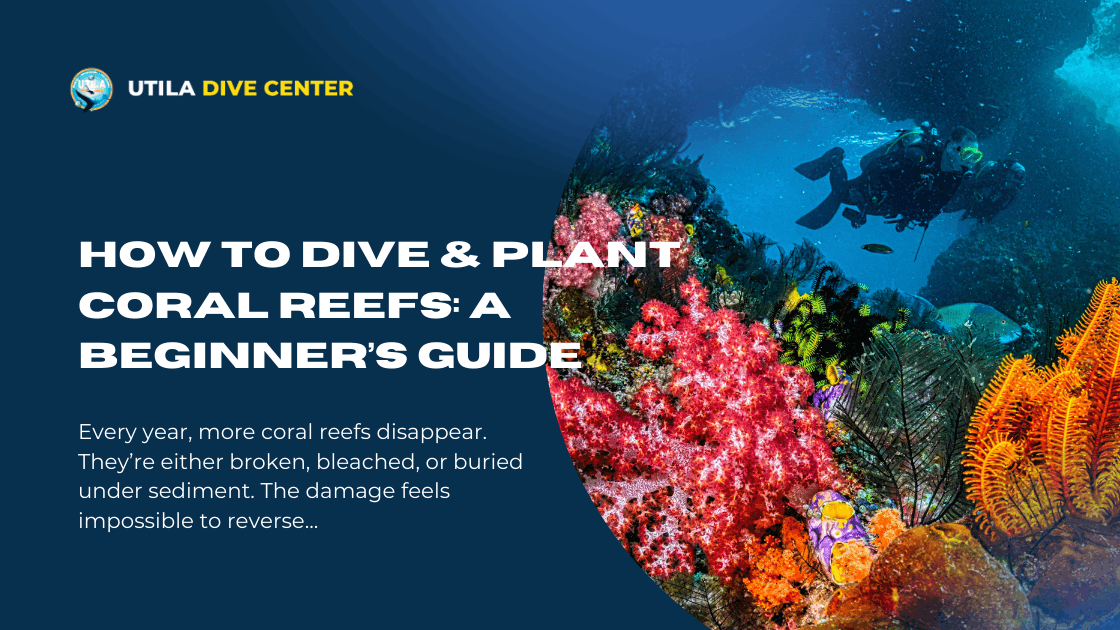
How to Dive & Plant Coral Reefs: A Complete Guide
How to Dive & Plant Coral Reefs: A Complete Guide
By: Manny Lagos | Date: 2026-01-22T11:25:22.492Z
How to Dive & Plant Coral Reefs: A Beginner’s Guide
Every year, more coral reefs disappear. They’re either broken, bleached, or buried under sediment. The damage feels impossible to reverse…until you see what happens when divers roll up their sleeves and plant new coral. It’s proof that with the right training, the right tools, and the right team, restoration through planting coral reefs is more than possible. In fact, it’s happening right now.
Here in the Caribbean, we watch it happen right in front of our eyes. Divers head out with small pieces of healthy coral, gently attach them to the reef, and let nature do the rest. Bit by bit, those tiny pieces grow into beautiful homes for fish, turtles, and other marine life.
At Utila Dive Centre, we love to teach people how to dive and how to make a difference while they’re at it. Whether you join us for an eco dive course or a simple restoration project, you’ll learn the skills to explore the underwater world and help protect it.
In this guide, we’ll cover why coral restoration matters, what to expect on a planting dive, and how you can actually be part of bringing a reef back to life.
1. Why Coral Restoration Matters
The ecological value of coral reefs
Coral reefs are also known as the “rainforests of the sea”, and it’s easy to see why. They take up less than 1% of the ocean floor, yet they’re home to around a quarter of all marine life. From tiny cleaner shrimp to reef sharks, these underwater worlds are full of life. Incredible, right?
But the benefits don’t stop underwater. Coral reefs also protect coastlines from erosion, storm damage, support tourism industries, and create sustainable fishing grounds for millions of people. Without them, both ocean and coastal communities would face drastic changes.
What plants are in a coral reef?
When we talk about coral reef plants, we’re referring to things like marine algae, seaweed, and seagrasses such as turtle grass and manatee grass. These coral reef plants aren’t just pretty to look at, they’re useful as well. These plants produce oxygen, hold the sandy seabed in place, and provide food for several herbivorous marine creatures.
Plus, coral reef plant adaptations are fascinating to say the least. Some can grow in areas with very little nutrients, cling tightly to rocks so they don’t drift away, and thrive in salty water where the sun shines through.
These plants are more than just a beautiful background scenery. They give small fish a safe place to hide, provide grazing spots for larger species, and help filter the water as well. So when you’re planting coral reefs, you’re also helping these plants flourish, and that’s a huge part of bringing the whole reef back to life.
Threats to coral ecosystems
Climate change is one of the biggest threats to coral reefs. When ocean temperatures rise, corals can become stressed and push out the algae that give them their colour and much of their food. This process is known as coral bleaching. Add pollution, overfishing, and harmful coastal development on top of that, and it’s a recipe for disaster.
It’s no surprise these fragile coral ecosystems are under serious pressure. That’s why they need our help now more than ever.
The importance of human-led restoration efforts
Coral reefs can recover on their own, but it’s a painfully slow process, sometimes taking decades. With the pressures they’re under today, that’s the time they don’t have. That’s why human-led restoration matters. Planting coral reefs helps damaged areas recover faster and adapt to changing conditions.
The results are hard to ignore. In many places, restoration projects have turned bare, lifeless patches into thriving reefs again. Fish return, the water clears, and the entire ecosystem begins to thrive. It’s a reminder that when people step in, recovery doesn’t just happen, it happens sooner.
But here's the thing – you can't just show up and start planting coral. These restoration efforts need trained divers who understand what they're doing. The good news? Getting involved is easier than you think, as long as you come prepared, of course.
2. Preparing for a Coral‑Planting Dive
Essential dive certifications
First things first. Before you can join a coral reef planting dive, you'll need to have your dive certification sorted. Most programs will ask for at least a PADI Open Water Diver certification.
And if you're looking at the more advanced restoration projects, you might need to get:
- An Advanced Open Water certification.
- Take a specialty course focused on conservation work.
Here at Utila Dive Centre, we've put together some fantastic eco dive programs that do double duty. You get to hone your diving skills AND get hands-on marine conservation training, how amazing is that?
Eco‑friendly dive equipment
When you're planting coral reefs, every single decision you make counts. Yes, even the gear you're packing. You'll want to grab some reef-safe sunscreen (believe us, the coral will thank you), neutrally buoyant fins, and gloves made from eco-friendly materials.
Here's a pro tip: plenty of divers bring along mesh bags during these dives. Why? Well, you can collect any underwater trash you spot along the way. It's like getting a bonus conservation activity thrown in!
Pre‑dive briefing & orientation
Now, before you even think about getting in the water, you'll need to sit through a proper briefing session. Don't worry, it's actually pretty interesting. You'll learn about coral biology (which is way cooler than it sounds), get the lowdown on the site conditions you'll be dealing with, and understand exactly what restoration tasks you'll be doing down there.
The briefing will also include a refresher on buoyancy control, and honestly, this part is super important. Even the tiniest accidental kick can seriously damage coral or kick up sediment that blocks sunlight from reaching the reef. It's one of those things where being careful really makes all the difference.
Once you've got all your prep work sorted and you're feeling confident about what comes next, let’s see what a typical coral restoration dive day actually looks like.
3. What to Expect in a Coral Restoration Dive
Morning workshop
Your day starts with a warm welcome from the instructors and a steaming cup of coffee on the dive centre deck. There's something truly special about that Caribbean breeze in the morning. It sets the perfect tone for the rest of the day.
Then, during the workshop, you'll learn how coral reefs actually work, get to know the different species you'll be planting, and discover how coral reef plant adaptations make these organisms so resilient in their underwater world.
You'll also spend time practicing with delicate coral fragments above water first. By the time you're actually underwater doing the real thing, handling them will feel like second nature. This entire session is about building up your confidence so you can work efficiently and safely when you're down there doing the actual planting.
First dive – nursery maintenance
Your first dive takes you down to the coral nursery, and honestly, it's not what most people expect to see underwater. Imagine rows of coral fragments swaying gently in the current, some hanging from these PVC "trees," others mounted on what look like underwater tables. It's like a well-maintained underwater garden.
Your job might involve brushing away algae with what's basically a soft toothbrush, removing debris, or tightening up attachment points. This process is almost meditative. You move slowly, focus on tiny details, and you're accompanied by nothing but the muffled sound of your own bubbles for company.
Second dive – coral planting
After your surface interval (perfect for sharing stories with your dive buddies), it's time for the main event. Your dive leader will guide you to the restoration site, a section of reef that's asking for some new coral growth.
This is where things get real. Using marine epoxy or biodegradable ties, you'll carefully secure those coral fragments to bare patches on the reef and make sure they're stable enough to handle whatever the ocean throws at them. It takes a bit of finesse, but that's what all that practice was for.
4. Techniques for Coral Propagation & Planting
Fragmentation methods
Fragmentation is probably the most common technique in planting coral reefs. Basically, scientists carefully break healthy corals into smaller pieces, then grow these fragments in nurseries.
Why does this work so well? It turns out that many coral species actually grow faster from small fragments than they do from one big colony. It's like they get a growth spurt when they're given a fresh start.
Outplanting strategies
Different sites need different strategies. In some spots, you'll see fragments attached to metal frames or concrete blocks, creating artificial reef structures from scratch. Other locations work better when corals are planted directly onto bare rock that's already there.
The whole point is giving each coral the absolute best shot at attaching securely and really taking off.
Genetic diversity & species choices
Now, here's something that might surprise you: healthy reefs are diverse reefs. The best restoration projects don't just plant one type of coral and call it a day. Instead, they plant multiple coral species with different genetic profiles to increase the reef's resilience against disease and environmental stress.
5. Challenges, Risks & What Success Looks Like
Fragment mortality & environmental stress
It’s time for a reality check: not every coral fragment is going to make it. Storms can roll in and knock fragments loose, sediment can settle and smother them, and temperature fluctuation can stress them beyond their limits.
That's exactly why planting coral reefs isn't a one-and-done kind of deal. It's more of an ongoing process that involves multiple dives spread out over months or even years. Some fragments won't survive, but that's expected from the start.
Long‑term monitoring & data collection
Success in coral reef planting isn't something you can judge after a few weeks. This is definitely a long-term game. Restoration teams make regular return visits to see how things are growing, click photos to track progress, and collect all sorts of data on coral health.
But it's not just about the coral itself. Many sites also keep tabs on fish populations and other signs that the reef ecosystem is bouncing back.
Community & cross‑organisation collaboration
Moving on, here’s something you need to know: the most successful projects aren't run by a single organization doing everything themselves. Instead, you've got scientists working alongside local communities, dive centres, and government agencies. Each group brings its own expertise and perspective to the table.
And honestly, this collaboration isn't just nice to have, it's an absolute must. You need the funding, sure, but you also need the scientific knowledge, the local support, and backing from the people whose livelihoods depend on these reefs.
6. Getting Started: Your Action Plan
Ready to get started? Here's your step-by-step plan to joining a coral planting project:
- Get certified: Start with a PADI Open Water course, then consider advanced or conservation-specific training for more restoration opportunities.
- Choose the right program: Look for dive centres like Utila Dive Centre with a good track record in coral reef planting.
- Invest in eco-friendly gear: From sunscreen to fins, choose gear that protects the reef you're helping restore.
- Learn the science: Attend workshops on coral reef plants and restoration methods before you dive.
- Join a restoration dive: Combine the thrill of diving in Caribbean waters with meaningful conservation work.
- Stay involved: Return for follow-up dives and share your experience to inspire others to do the same.
Conclusion:
Planting coral reefs isn't just about sticking some coral to the seabed and hoping for the best. You're literally giving life back to an entire ecosystem that supports thousands of species and helps protect our coastlines.
At Utila Dive Centre, we've watched this transformation happen over and over again, and it never gets old. Fish return, communities thrive, and divers surface knowing they've actually helped the ocean in a way that'll last for decades.
The best part? You get all the amazing health benefits of SCUBA diving: fitness, stress relief, and that incredible sense of peace you only find underwater. All while doing something that actually matters for the planet.
So here’s the real question: are you ready to trade an ordinary dive for one that could genuinely change the world?
If yes, then go Eco Diving today!
\
References:
[1] – NumberAnalytics.com - Coral Reefs 101: Basic insights into coral ecosystems
[2] – Divessi.com - Everything you’ve always wanted to know about coral reef restoration
[3] – CoralCoastDivers.com - The biology of coral reefs: A diver’s primer
[4] – InfiniteBlueDiveTravel.com - Saving our coral reefs: How divers can help
Affordable Dive Trips In World Without Breaking the Bank
Utila Dive Center has listed the best budget friendly dive trips around the world and insider tips to enjoy scuba adventures without breaking the bank.
Read more
Guide: What is Drift Diving & Is It Safe?
Drift diving is a thrilling way to explore the ocean. Learn how drift diving works, what gear you need, safety tips, and how to get started confidently.
Read more
1 Week Dive Trip to Utila: Ultimate Itinerary for SCUBA Divers
Plan your perfect 7-day dive trip to Utila, Honduras. Uncover the top dive sites, local tips, and budget-friendly options for divers.
Read more
Emergency First Response Every Diver Needs to Know
Emergencies can happen anytime while diving, learn the key first response skills every diver should know to stay safe and help others when it counts.
Read moreLET'S CHAT!
Whether you’re looking to learn to dive for the first time or want to take the next step and become a Divemaster or Instructor, our team is here to help create a custom package that helps you achieve your goals!